The Precinct
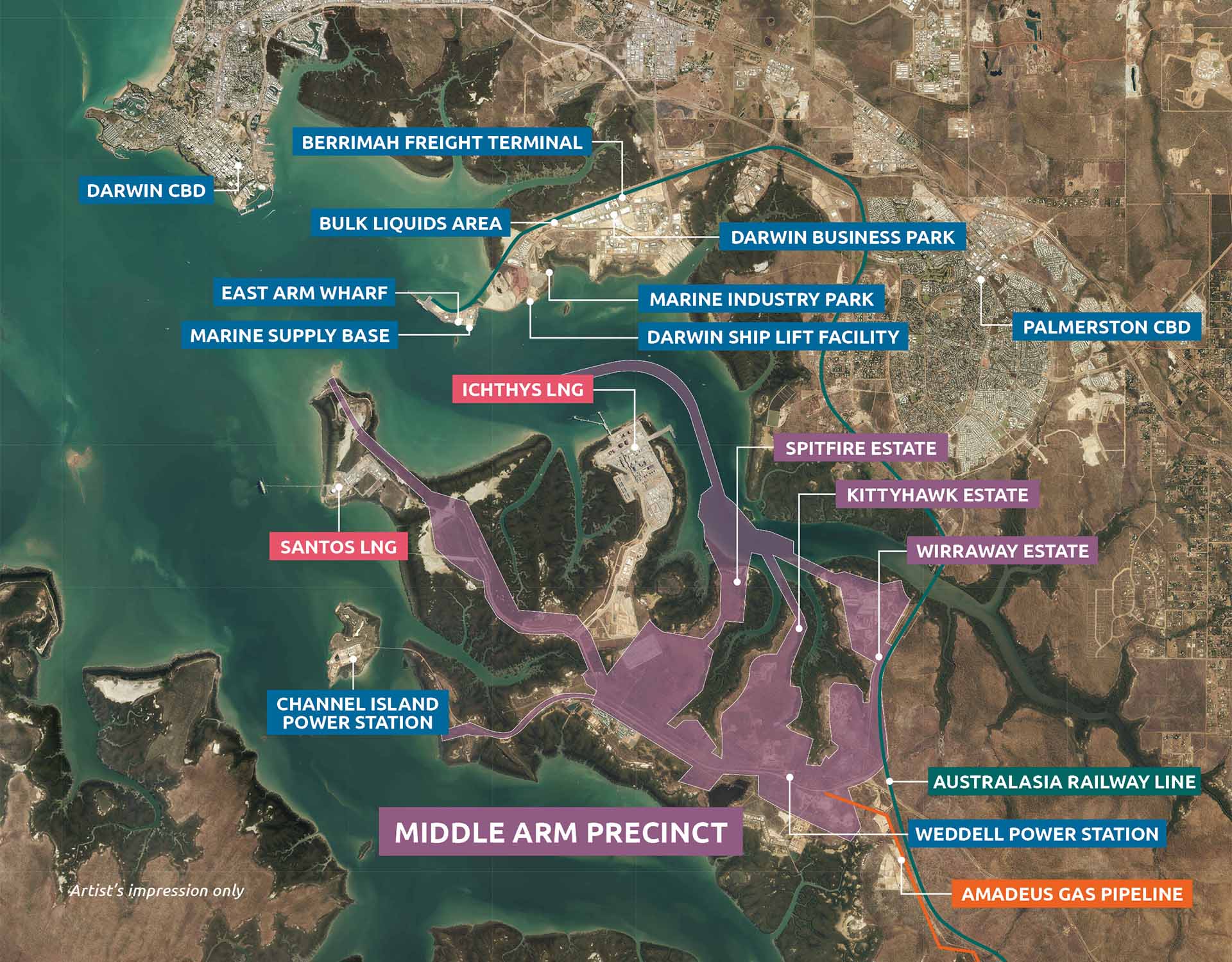
The Middle Arm Precinct is located within Darwin Harbour, in the Northern Territory, Australia.
Middle Arm’s position reflects the importance of Darwin in relation to our neighbours in the north. And of course, the whole of the NT's opportunity to build on our competitive strengths, rebuild the economy and support long-term economic security.
The Territory Government is undertaking master-planning of the precinct, including common user infrastructure and services, as well as over 200 studies to inform a strategic environmental assessment to guide and regulate development of the precinct.
Middle Arm Peninsula is already home to the Santos Darwin LNG and the INPEX Ichthys LNG processing facilities - both companies are committed to net zero emissions including through carbon capture and storage (CCS).
Working together with an integrated and coordinated approach across the Territory, as well as a focus on enhancing links with Asian markets, will capture synergies and maximise value for money.
Critical infrastructure
Investment in critical infrastructure for the Middle Arm Precinct will help to rebuild the economy. A growing economy and population stimulates business activity, job opportunities and investment to create certainty and security.
The project aims to transform Middle Arm into a precinct where proponents could develop industrial facilities.
This work ‘de-risks’ investment by creating certainty for industries on the availability of infrastructure and services and a clear road map of the rigorous and efficient development and environmental approvals.
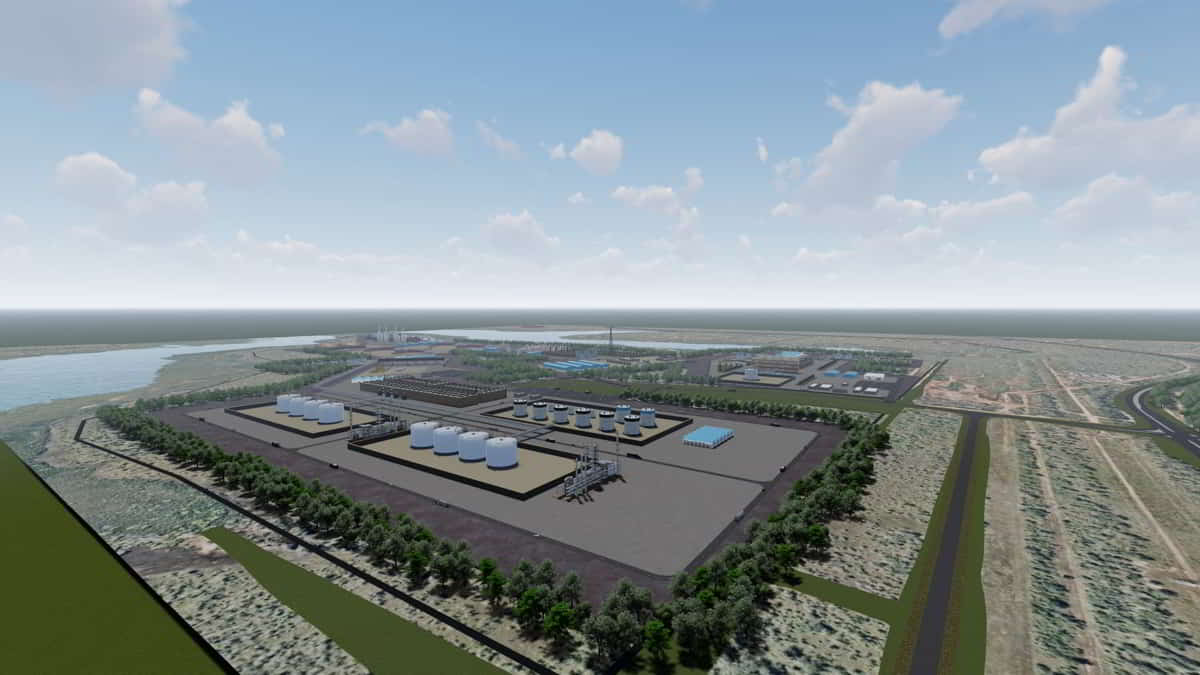
The proposed precinct area covers about 1,500 hectares or 15 square kilometres. The newly developed land would have dedicated areas for specific industries and common user infrastructure such as:
- new roads
- power and water supply
- telecommunications
- infrastructure corridors
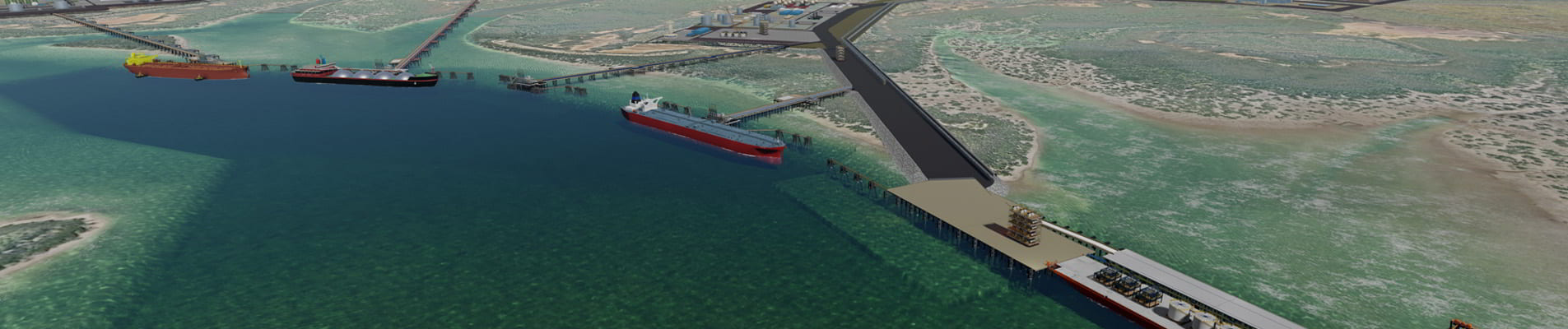
- modular offloading facility
- a shipping channel
The Australian Government has committed $1.5 billion planned equity to enable the planning and construction of common user infrastructure within the precinct.
This includes a shared shipping channel, module offloading facility, and a common use facility for industries in the precinct to share.
Master planning is also considering road upgrades, a renewable energy network, service and product corridors, water systems and a carbon capture, utilisation, and storage hub.
Jobs and investment
The construction phase will sustain thousands of trade, manufacturing and service sector jobs for years, followed by permanent operational positions and indirect support roles. This will include jobs for Indigenous Territorians.
Building and retaining a bigger workforce in the Territory will further stimulate the economy by driving demand for goods and services and creating economies of scale.
Strong collaborations between businesses, community services and vocational education and training providers will support Territorians to be job-ready.
From planning, through to construction and operations, there will be substantial flow-on benefits for Territory businesses through the life of the precinct.
Significant private sector investment will see interstate and international workers relocate across the Territory, boosting population and rebuilding and diversifying our economy.
Precinct aims
- The precinct is designed to take advantage of the Territory’s natural advantages including our strategic location and our world-class solar, energy and minerals resources. Almost all critical minerals required for the manufacturing of renewable energy components are available in the Territory.
- Provide substantial, long-term job opportunities, and contribute to population and economic growth in the Territory.
- Attract private investment to the Territory and support current and emerging industries, especially renewables and low-emission energy and fuels and minerals processing.
- Will make a significant contribution to rebuilding the economy through the transition to a lower emissions future, as technology and cost curves allow.
- Manage all industrial activities within a governance structure that will be responsible for ensuring that sustainable outcomes are monitored, reportable and auditable for both transparency to the public and to satisfy regulatory requirements.
- The precinct will enable the Territory Government to generate more revenue to invest in other key priorities, such as hospitals, schools and further enhancing liveability across the Territory.
Next steps
- Submission of draft EIS and Program to the Northern Territory and Commonwealth regulators (NT EPA and DCCEEW). These will be published for public comment and feedback.
- A supplementary EIS which responds to comments will be published for comment and feedback.
- Undertake detailed design of the common user infrastructure.
- Develop the governance framework to support the entity (an authority) that will manage the precinct.
- Develop management plans that will guide proponents in how to operate within the precinct. This will include commitments to meet the benchmarks (conditions and limits) that the precinct will set.
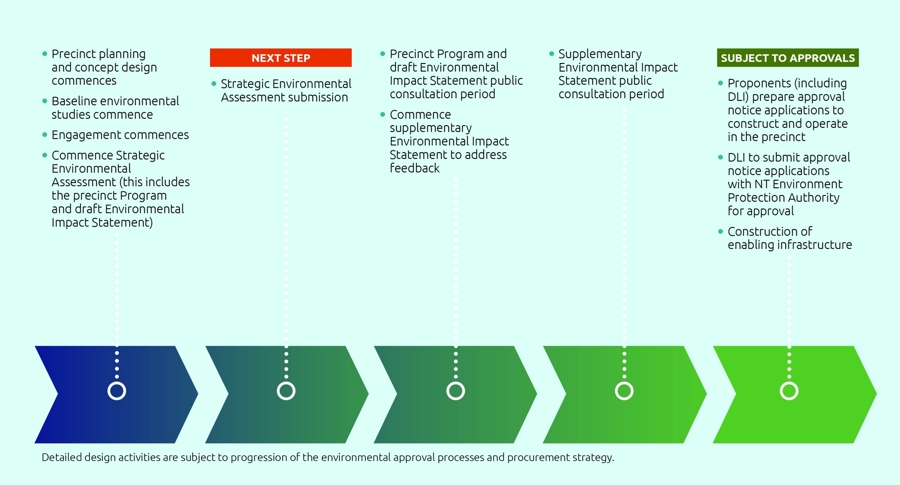
Interested industries (proponents) who want to locate themselves in the precinct, will develop and submit their approval notice application to the NT EPA.
Approval notice applications will be published for public comment and feedback.
Significant dates
- In 2021, Infrastructure Australia placed the precinct on the National Infrastructure Priority List recognising that investment will activate economic growth across Northern Australia and unlock a range of industries operating in the region.
- In 2022, a Strategic Assessment Agreement was executed between NT and Commonwealth regulators.
- In 2022, the Australian Government allocated more than $1.5 billion funding through an equity approach for shared enabling infrastructure at the precinct - in partnership with the NT Government.
- In 2022-23, the NT Government committed $27 million towards Middle Arm environmental studies and planning and project development work.